When a baby cries, it activates something deep inside us.
Your heart rate increases.
Your thoughts race.
Your body braces.
And this isn’t just “worry” or you showing up too anxious. Parenthood quite literally changes the brain. Research shows that after having a baby, the brain becomes more attuned to threat detection, emotional processing, and hypervigilance especially in response to your baby’s cries, cues, and distress. This biological rewiring is designed to help you stay responsive and protective.
In many ways, your nervous system becomes primed to constantly scan:
Are they okay?
Do they need me?
What’s wrong?
How do I fix this?
Which means when crying continues for long periods, happens frequently, or occurs alongside sleep deprivation and overstimulation, parents can begin operating from a state of chronic nervous system activation too.
Your chest tightens.
Your breathing changes.
You feel urgency to stop the crying quickly.
And if you’re parenting a newborn or highly sensitive baby, this can happen repeatedly throughout the day and night until eventually your own nervous system begins running on survival mode. This matters because baby sleep is not just about sleep. It’s about nervous systems.
For years, baby sleep has largely been approached through techniques, routines, and strategies focused on “getting babies to sleep.” But sleep is actually one of the most vulnerable human actions. To fall asleep, babies must let go into unconsciousness. The nervous system is constantly asking: Am I safe enough to let go? This is why I often say:
Sleep isn’t something we force. It’s something we create conditions for. And those conditions are deeply connected to safety.
The Four Pillars of Nervous System Safety
When I support families, I often talk about the four pillars of safety that influence sleep and regulation:
• Body safety
• Relational safety
• Environmental safety
• Parent safety
All four work together to shape how a baby experiences sleep, separation, transitions, and settling. And interestingly, rhythmic sound and shushing can support several of these pillars at once.
Relational Safety: “I’m Not Alone In This”
Babies are not born able to regulate themselves independently. They borrow regulation from us before they can create it for themselves. This is called co-regulation. In the early months especially, babies rely on the presence, rhythm, touch, voice, predictability, and nervous system of a caregiver to help them move through stress, overwhelm, and transitions. This is why shushing often feels so calming to babies. Not because it’s a trick or because it forces sleep, but because rhythmic sound can act as a cue of familiarity, connection, and safety. Inside the womb, babies spent months surrounded by constant sensory input:
heartbeat,
blood flow,
breathing,
movement,
muffled sound.
The world was not silent. So, for many babies, rhythmic shushing can feel grounding because it mimics the predictability and sensory familiarity their nervous system already recognises. It becomes a cue that says: You are not alone. You are held through this and that matters deeply for regulation.
Environmental Safety: Familiar Sensory Cues
Often when we think about sleep environments and set ups, we focus only on darkness or wake windows. But environmental safety is much bigger than that. The nervous system loves predictability. Familiar sensory cues can reduce the “alarm response” babies experience around transitions into sleep.
This is why repetitive, familiar sounds can become powerful sleep cues over time. Not in a rigid sleep training sense. But in a nervous system sense. The sound itself becomes associated with slowing down, closeness, support, and settling. A steady shushing sound can help soften the abruptness of transitions:
from arms to bassinet,
from active wakefulness to rest,
from stimulation to calm.
And importantly, this isn’t about removing support. It’s about expanding safety around sleep.
Parent Safety Matters Too
This is the piece that often gets missed in conversations around baby sleep. Parents have nervous systems too. And modern parenting can be incredibly overstimulating.
Fragmented sleep.
Constant crying.
Little downtime.
High mental load.
Trying to regulate yourself while simultaneously regulating another tiny human.
When parents are constantly pushed beyond capacity, it impacts the entire sleep ecosystem. Because babies don’t just respond to what we do. They respond to what we carry inside. If a parent is highly anxious, braced, overwhelmed, or operating from survival mode, babies often feel that urgency too.
This is why support tools can be so valuable. Not because they replace you and your connection, but because they help hold some of the load with you. In the newborn months especially, having something that can gently take some of the sensory and emotional load off can feel like a genuine blessing.
It’s normal for parents to need moments to gather themselves so they can show up more regulated for their baby, to catch their breath, soften their shoulders and to slow their nervous system down. Not because they are failing but because regulation is hard when you are running on fragmented sleep, overstimulation, constant hypervigilance, and very little ongoing support.
I have witnessed when parents have access to a steady, rhythmic shushing sound supporting the environment it has helped create that pause while supporting their baby too. And when the room feels calmer and more controlled, parents often breathe slower, their voice softens, their body relaxes. In this state they can honour a pause and respond intentionally more often instead of reacting from panic or overwhelm. This is a powerful shift because babies don’t just respond to what we do, they respond to the nervous system state we bring into the room.
Sleep Is About Feeling Held
One of the biggest misconceptions in baby sleep is that babies simply need the “right technique.” But babies are not robots responding to perfectly executed strategies. They are tiny humans with developing nervous systems.
Sleep is relational.
Sleep is sensory.
Sleep is biological.
Sleep is emotional.
And often what helps most is not removing support completely but creating enough layers of safety that sleep can emerge naturally.
This might look like:
• touch
• proximity
• voice
• feeding
• movement
• predictability
• rhythmic sound
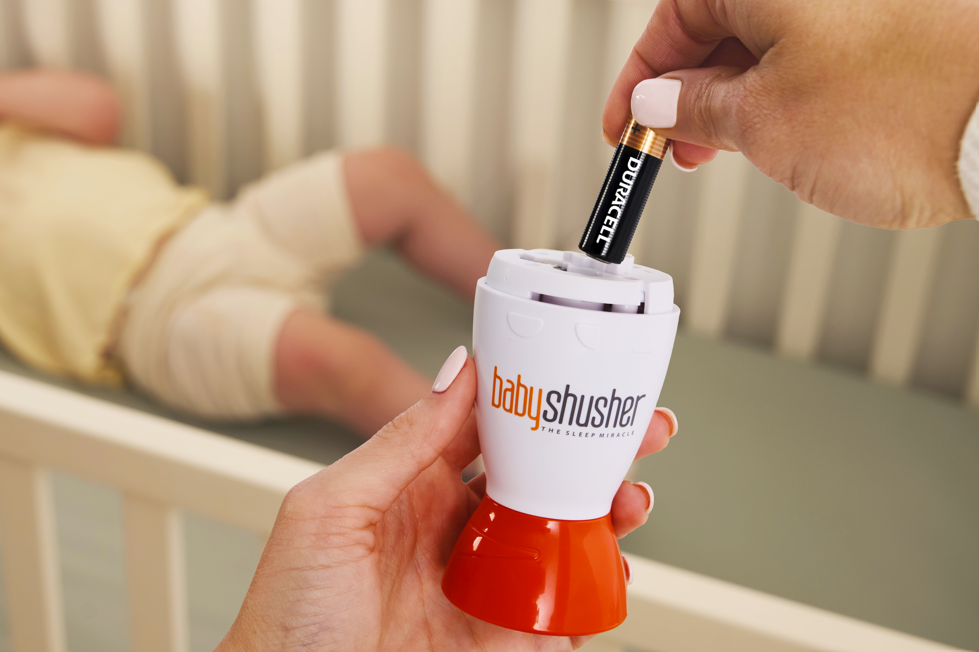
A shushing device is not a replacement for connection. But it can absolutely become part of a layered, responsive, nervous-system-aware approach to supporting babies through sleep and regulation. Sometimes the most powerful thing we can offer is not more pressure or more techniques, but a nervous system that feels supported, held, and safe enough to soften too. And when a baby feels safe, sleep can emerge.
About the Author
Jen Cuttriss is a Registered Nurse, infant and child sleep specialist, neuro protective sleep coach, mind-body practitioner, parent educator, and founder of Sleep Thrive Grow. Known for her “Safety Before Sleep” approach, Jen supports families through baby and toddler sleep using a responsive, connection-led lens grounded in nervous system science, emotional development, and realistic parenting support.
Rather than focusing on simply “getting babies to sleep,” her work helps parents understand the deeper relationship between regulation, attachment, temperament, sensory needs, parent capacity, and sleep. Jen is passionate about helping families move away from pressure and perfectionism and toward creating sustainable rhythms that support both babies and parents to thrive. She is also the host of the Thriving Parent-ing Podcast and a mum of three.