The sound battle: hiss or cadence?
If you’ve ever fallen down the parenting-rabbit hole of “white noise vs pink noise vs brown noise vs whatever sound machine” you’re not alone. Many new parents invest in a noise machine (or two) only to find their sweet newborn still frowning at bedtime. The question becomes: why isn’t the white noise working?
More and more, parents are discovering that the difference isn’t just the volume or machine quality — it’s the pattern. Enter the humble “shhh…” cue.
What white noise does — and where it falls short
Studies show white noise can be incredibly effective in some cases. White noise works because:
-
It masks environmental disturbances (noise from siblings, traffic, HVAC).
-
It gives a consistent auditory backdrop, which helps newborns adjust from womb-life (which was noisy) to cradle-life.
However — and this is important — white noise is static. It lacks rhythm and variation. According to one analysis, “the brain is built to look for patterns… In the absence of patterns, the brain will work hard to find them, making our children more exhausted (even though they have been sleeping).”
Why the “shhh” rhythm is gaining traction
The “shhh” isn’t just cute — it mimics what your baby heard in the womb: your breath, your heartbeat, the soft whoosh of blood and sound. Research on the “calming response” found that combinations of swaddling + movement + rhythmic sound (for example a shushing voice) produced measurable calming in infants compared to no intervention.
Additionally, hearing-science research indicates that infants are wired to track rhythm early in life. One paper found that pre-term neonates could detect rhythm violations in auditory sequences, suggesting that rhythm is fundamental to early auditory processing.
In short: a rhythmic “shhh” provides pattern, variation, human voice comfort, and a sense of closeness — all of which white noise lacks.
What parents are saying (aka Reddit and beyond)
Here are some real-parent perspectives:
- “We thought the white noise would do the trick… it didn’t. Once we switched to a rhythmic shush, bedtime dropped from 30 minutes to 12.”
- “White noise is fine for early weeks; by month four, my baby needed something else — the ‘shhh’ via the Shusher was game-changing.”
What’s clear: as babies grow, their sensory needs change. What worked at 2 weeks might not suffice at 3 months — and the pattern-based soothing works better.
How to apply this (and not abandon white noise entirely)
You don’t have to pick a side. Many families use both — white noise as background masking + shushing as primary soothing rhythm. Here’s how to make it work:
-
Use your white noise machine at a moderate volume in the crib area to block external sounds (but ensure it’s safe level and placed at a recommended distance).
-
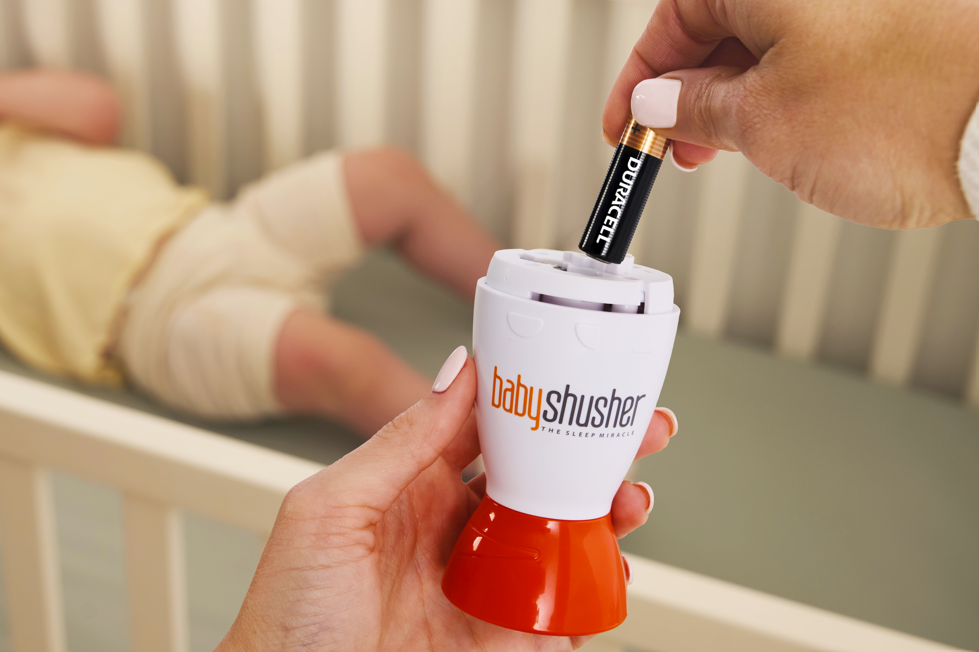
At bedtime (or during wake-ups), introduce the rhythmic “shhh…” soothing: either your own, or a device made for it — for example, the Baby Shusher.
-
Keep the “shhh” cue consistent: same tone, same time, same place. This builds a sleep association as strong as the machine itself.
-
Check volume and placement: Even white noise machines should be placed outside the crib at a safe distance.
-
Transition: As your baby grows, you may reduce or change the sound pattern, but the “shhh” rhythm is something they remember as a signal for sleep.
FAQ
Q: “Is white noise bad for babies?”
A: No, not inherently — but it can be mis-used. With safe usage and safe sleep practices, white noise and shushing is totally safe.
Q: “Is shushing better than white noise?”
A: It depends! Shushing reminds infants of the sounds in the womb, activating the calming reflex. White noise can also be effective when used properly.
Q: “Can I do both?”
A: Yes, absolutely. Many parents use white noise as a steady backdrop and shushing (or the Baby Shusher) as the active sleep cue. This combo covers masking + rhythm.
Q: “When should I stop using these sound machines?”
A: There’s no hard stop date, but many experts suggest revisiting their use around toddlerhood (~2-3 years) and gradually reducing dependency on them. Look out for signs your child falls asleep easily without them.
Q: “What might be wrong if neither works?”
A: If your baby still struggles despite sound cues, revisit other sleep hygiene factors: wake windows, light exposure, nap lengths, feeding schedule. Sound is just one piece of the puzzle.
Final thoughts
At the end of the day, sleep isn’t just about volume or tone—it’s about rhythm, pattern, and comfort. White noise might cover the “masking” side nicely, but a rhythmic “shhh” covers the “settling down” side. If your baby seems unresponsive to the static hum, consider embracing the shush.