If you’re a parent whose baby still won’t sleep despite the hum of a white noise machine playing through the night, you’re not alone. You set the tone, you dim the lights, you hit “play” on the sound machine… and still, your little one is wide-awake, fussing, or popping awake every 20 minutes. It’s frustrating and you might be wondering: Why is white noise not working for my baby?
Let me reassure you: the problem isn’t you — it’s that a generic white noise machine sometimes just doesn’t hit the right soothing rhythm for a baby’s brain. And believe it or not, the solution might be simpler than you thought: a rhythmic “shhh” — human-like, womb-mimicking, and far more responsive.
Why White Noise Sometimes Fails
White noise has earned its place in the baby sleep kit for good reason: those steady static-type sounds mask background noise and abrupt household noises (door slams, sibling footsteps) that might wake a baby.
But here’s the catch:
-
Not all “white noise” machines or apps produce true white noise (i.e., that continuous, rough rumble). Some use gentle nature sounds, bird-chirps, ocean waves — which aren’t always effective.
-
Volume and proximity matter. Some machines exceed safe sound levels for baby’s ears; others are too quiet or too distant to trigger calming.
-
Baby’s individual preferences and developmental stage play a role. What worked last month may not work this month. Some babies simply don’t respond to constant ambient noise.
-
The rhythm is consistent, but babies may respond better to a rhythm that fluctuates like the human body or womb environment.
The Science Behind the ‘Shhh’
Enter shushing — the rhythmic, human-voice “shhh” that mimics what your baby heard in utero. According to child-development researchers and pediatricians, babies are born with a calming reflex: a built-in neurologic circuit that’s triggered by certain womb-like cues (sound, motion, snugness) and helps them switch off fussing and switch on sleep.
Specifically:
-
In the womb, your baby heard whooshing blood, your heartbeat, your digestive system humming. After birth, the sudden drop in noise and motion can feel jarringly quiet. Shushing fills that gap.
-
A 2019 study found that combining swaddling + sound + movement triggered an immediate “calming response” in infants (lower heart rate, less fussing) compared to no intervention.
-
Dr. Harvey Karp’s famous “5 S’s” for soothing babies (Swaddle, Side/Stomach, Swing, Suck, Shush) emphasizes “Shushing” (i.e., a human-like “shhh” sound) as a key component.
Why does the human “shhh” sometimes out-perform a generic white noise machine? Because it introduces rhythm, subtle variation, and the human voice element — cues that babies may respond to more directly than a flat drone. The rhythmic “shhh” wakes their attention in a gentle way and engages that calming reflex more fully than a constant hum.
How to Know Your Baby Prefers Shushing
Here are a few signs that your baby might respond better to a shushing rhythm than to a plain white noise machine:
-
Your baby calms when you manually make a “shhhhhh” sound near their ear (2–3 inches away) and returns to sleep.
-
You find that your baby is more alert or responsive when a human voice is present, even faintly, rather than when a machine plays alone.
-
Once you turn off the machine or leave it out of room, the baby wakes frequently, suggesting a dependence on the humming noise instead of soothing rhythm.
-
You’ve tried multiple white noise “tracks” (fan, vacuum, hum) and none seem to help — so it’s not the concept, it’s the implementation.
If these signs sound familiar, you might be looking for an alternative to white noise that uses a rhythmic, human-style shush rather than just constant background noise.
What to Try Instead: Shushing Devices & Soothing Routines
If you’ve been Googling “baby won’t sleep" and finding frustration instead of rest, here’s a new routine to try:
-
Switch from generic white noise to rhythmic shush
-
Use your voice: lean close (but safely) and do a long “shhhhhh” near your baby’s ear, matching the length/volume of fussing. (Doing this manually works but is tiresome if you’re trying to rest too.)
-
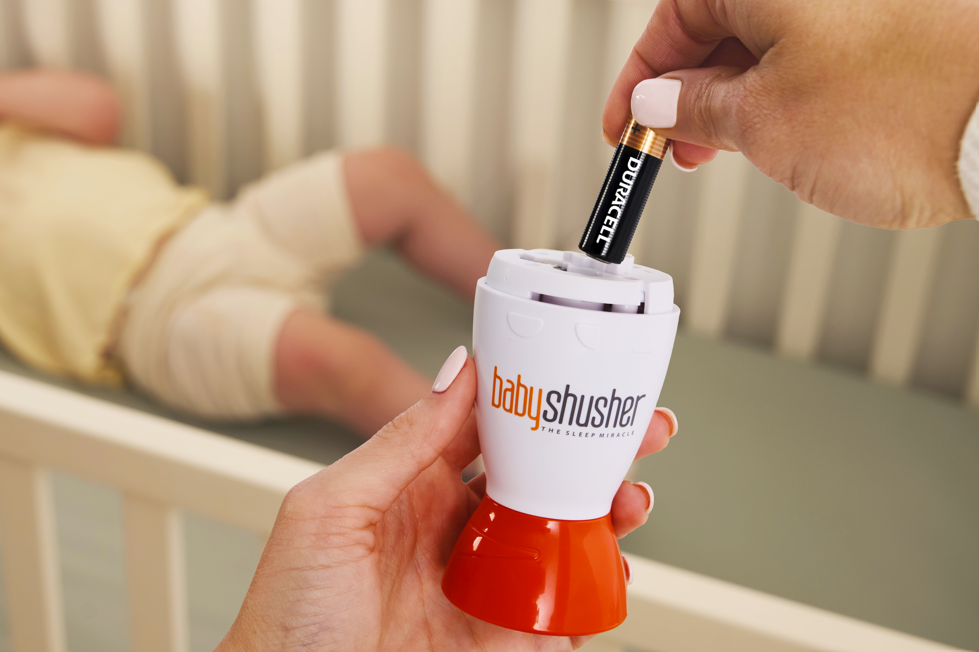
Consider a purpose-built device: the Shusher lineup fits the bill. Devices like the Baby Shusher are designed to replicate that rhythmic “shhh” at the appropriate volume and interval, freeing you up and giving consistency.
-
-
Combine with other calming cues
-
Dim the lights, ensure the room is safe and comfortable.
-
Swaddle or use a sleep sack if your baby is still in that snug stage.
-
Keep the baby on their back for sleep — but during calming, you can hold them upright, side, or gentle sway (just always place back down safely).
-
Offer a pacifier if your baby uses one (sucking can enhance the calming reflex).
-
-
Set the context
-
Use the shushing sound as part of a bedtime or nap routine. Consistency helps babies link the shush with sleep.
-
Place the device (or yourself) close enough for the shush to be audible, but safe from being too loud or dangerous for baby’s ears. (Note: safe sound levels matter!)
-
Use the shushing sound not just to block noise (like white noise does) but to mimic the rhythmic auditory environment of the womb.
-
-
Monitor and adjust
-
Watch how your baby responds: if they calm within a couple minutes of shushing, you’re on the right track.
-
If not, you may need to adjust volume or proximity. You may also need to check for other issues (hunger, diaper, temperature).
-
As baby grows, you may shift from constant shush to occasional cueing so they learn to self-soothe.
-
A realistic soothing routine might look like:
-
10 minutes before bed: dim lights, start the device, hold or swaddle baby.
-
Baby fusses or rubs eyes → Start shushing (or Shusher device). Continue until baby enters drowsy state.
-
Place baby in crib (on back) with the Shusher device nearby or on timer.
Frequently Asked Questions
Q: If white noise doesn’t work for my baby, does that mean white noise is bad?
A: Not at all. White noise has many benefits—masking disruptive sounds, creating a familiar womb-like backdrop. But, not all babies respond well and some white noise machines may exceed safe volume levels or lack the rhythmic element that triggers calming.
Q: I’ve tried white noise and it’s not working — what should I try next?
A: If white noise isn't working for your baby, here are next-step alternatives:
-
Try a rhythmic “shhh” style sound (human-voice mimic) that engages the calming reflex.
-
Switch the machine out for a device designed for shushing rhythm, such as the Baby Shusher or Shusher Firefly.
-
Combine sound with other soothing cues (swaddle/firm sleep sack, reduced lighting, consistent routine).
-
Monitor volume/placement and make sure the issue isn’t environment (nap timing, hunger, temperature, development stage).
-
If persistent problems, consult a pediatric sleep coach or pediatrician to rule out other disruptors (reflux, overtiredness, etc).
Q: What’s the difference between white noise, pink noise, brown noise — and shushing? Does it matter?
A: Yes! The “color” of noise refers to how sound frequencies are distributed, and that can make a big difference for how babies respond:
-
White noise plays all frequencies equally, creating a high-pitched hiss or static-like hum.
-
Pink noise reduces the higher frequencies, giving a softer, more muffled sound — like rainfall or wind.
-
Brown (or red) noise lowers the high frequencies even further, producing a deeper rumble similar to thunder or distant surf.
While these noises are steady and constant, shushing adds a rhythmic, human element that engages a baby’s calming reflex more effectively. The “shhh” sound mimics the womb’s natural whooshing — heartbeat, blood flow, and movement — making it dynamic instead of flat.
Some babies prefer pink or brown noise because it’s gentler on the ears, but others respond best to a rhythmic shush that feels familiar and interactive. If white noise hasn’t worked for your baby, it’s completely valid (and often more effective) to explore shushing as an alternative sound cue for sleep.
Final Thoughts
If you’re feeling defeated because white noise is not working for your baby, take heart. You’re not failing — you’re simply discovering that your baby’s brain might prefer the rhythmic, human-voice “shhh” over a static hum. By tapping into the calming reflex, mimicking the womb environment, and using a shushing tool (or your own voice) alongside a consistent sleep routine, you’ll be giving your baby the kind of auditory cue that truly says: “It’s time to rest now.”
Try Baby Shusher and see if the "shhh" works for your little one.