The clock strikes 3 a.m. (again)
Your eyes sting, your coffee supply is a distant memory, and your sweet baby looks wide-eyed and ready to host a midnight TED Talk. You’ve bounced, rocked, hummed, and whispered every lullaby you know… nothing.
You’re not alone. In fact, if you scrolled Reddit right now, you’d find hundreds of parents in the exact same situation, typing “my baby won’t sleep middle of the night” with one hand while holding a pacifier in the other.
No, this isn’t a glitch in the matrix. This is parenting. It happens more than you think. As one Reddit parent put it: “We tried everything—rocking, humming, standing on one leg while juggling a flashlight—still 3 a.m. parade.”
So yes, you’re not alone. Let’s talk about what’s going on — and how to navigate this particular dark hour with your sanity intact.
Why babies wake at 3 a.m.
There are several reasons your little one (and by extension, you) keep showing up for this 3 a.m. party:
-
Circadian rhythms + sleep pressure don’t align. In a phenomenon sometimes called a “split night,” a baby may sleep a solid span, then wake up around 2–3 a.m. ready to go, because their internal timing has shifted.
-
Developmental leaps. Rolling over, teething, creeping, saying “mama”—any of these milestones can disrupt sleep. One review noted that when babies learn to crawl, wake episodes increase.
-
Over-tiredness or under-tiredness. If the baby’s wake windows or bedtime are off, you might either flood them with too much “sleep debt” (making them wired) or give them too little (so they’re under-tired at bedtime).
-
Environmental cues. Bright lights, loud noises, or inconsistent routines can confuse a baby’s circadian rhythm. Experts recommend consistent routines and exposure to daylight.
In short: this 3 a.m. moment is not a reflection of your parenting failure—it’s biology, development, and environment colliding.
What parents swear by at 3 a.m.
When nothing else seems to work, some real‐world tactics tend to help. From Reddit threads, sleep-coach blogs, and parent groups:
-
Keep it boring. At 3 a.m., the room should scream “sleep,” not “party.” Dim the lighting, reduce tone of voice, skip exuberant catching‐up. As one pediatric sleep coach recommends: keep night‐wakes quiet and unexciting.
-
Simple consistent routine. Intro music, evening wind-down, then when wake‐up happens, same calm cues every time: soft sound, swaddle if used, unchanged surroundings. Studies show consistent bedtime routines improve overall sleep.
-
Rhythmic soothing. Rather than bouncing or bright lights, a gentle “shhhh…” (human voice, rhythm, not random static) can cue the nervous system towards calm and sleep.
-
Check wake windows & naps. Make sure the baby’s not overtired — or conversely under-tired — heading into bedtime. Fine-tuning wake windows often helps the 3 a.m. wake.
-
Have a rescue tool ready. When you’re exhausted, you need something reliable. Whether it’s a comfort object, a sound machine, or a rhythmic device, keeping one by your bedside can make the difference between 15 more minutes and 90 more minutes.
The Shusher Shortcut
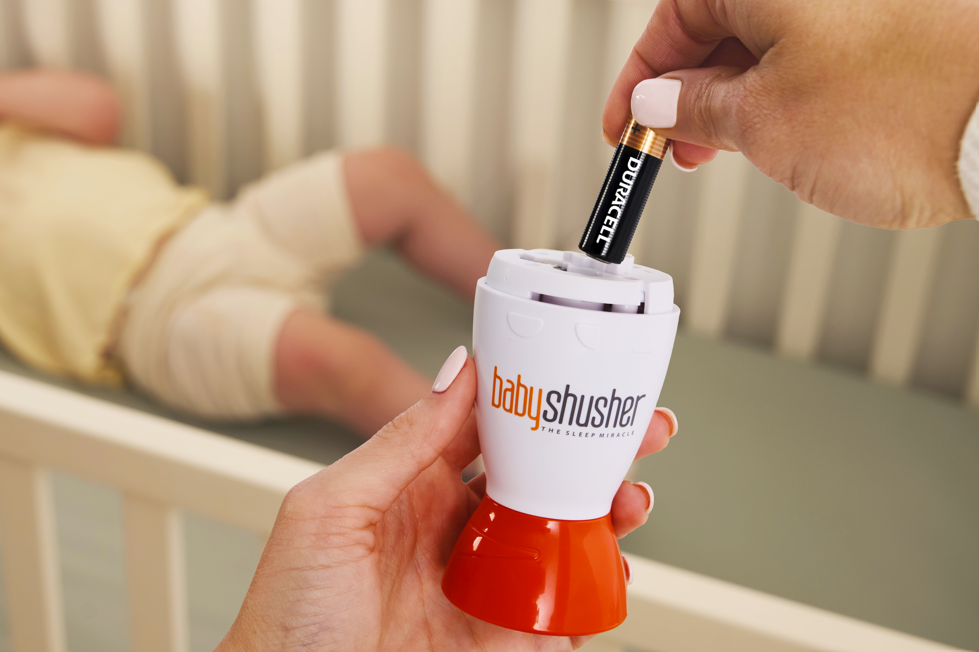
When your brain is mush and you’re at 3 a.m., finding the energy to start a full soothing dance is… ambitious. That’s why the Baby Shusher exists: to replicate that soft, rhythmic “shhh” voice pattern your baby soothes into, without you doing all the work.
It gives your baby a familiar cue (“It’s still bedtime”) while you rest a little too.
Pro tip: Keep one by the bedside or in the nursery rather than fetching it from across the house. At the 3 a.m. alert, shorter distance = less stimulation = faster return to sleep.
Frequently Asked Questions
Q: Is it normal for my baby to wake up at 3 a.m. every night?
A: Yes—especially during certain phases (4-6 months, crawling onset). Frequent waking is often a normal part of development.
Q: Will this phase ever end?
A: Yes. As your baby’s sleep cycles consolidate and you establish consistent routines, many families see fewer and shorter mid-night wake-ups. Patience and consistency are key.
Q: Should I feed my baby when they wake at 3 a.m.?
A: That depends on their age, growth, and doctor’s guidance. If they’re already past the age of night feeds, try soothing first, and feed only if truly hungry. (Check with your pediatrician.)
Q: Could this be a sleep association problem?
A: Possibly. If every wake requires rocking, feeding, or bouncing, the baby may have learned to expect that. Experts note that overcoming such wake‐ups involves building a soothing routine and reducing dependency on stimulus.
Q: What if none of these tips work?
A: If wake-ups continue for weeks on end, especially if the baby seems unhappy, sick, or slept disruptively during the day, consider consulting a pediatric sleep consultant or your pediatrician.
Takeaway
You might not be able to prevent every 3 a.m. wake-up (we’re looking at you, growth spurt), but you can change the tone of the wake-up: from frantic to calm, from long ordeal to short reset. Want the nighttime to stop feeling like a marathon? Make your environment boring, your cues consistent, your soothing rhythmic. And keep that handy Baby Shusher close by.