The bedtime battle no one told you about
You know that moment when you finally think: “Okay, baby is tired… it’s bedtime.” But instead of calm, you’re greeted with the sleep-resistance version of a sneeze guard: wriggling, fussing, protesting, maybe tears. Your heart sinks because you’re pretty sure you did everything right — routine, bath, dark room, the works. And yet you’re still facing a fight. Welcome to the world of the baby who fights sleep.
It feels personal. Like you’re losing to someone in a diaper. Reddit threads are full of phrases like:
- “My baby fights sleep like it’s his full-time job.”
- “I can see the little wheels turning: ‘Sleep? Nope. I’ll resist!’”
But the good news? There are patterns. There are solutions. And there are things parents swear by — pulled right from those Reddit threads, combined with expert findings.
Why babies fight sleep (and why it’s not just “bad behavior”)
Understanding what’s under the hood helps you change the engine instead of just pushing harder. According to sleep consultants:
-
Over-tiredness: As one pediatric-sleep-consultant article put it, “A baby becomes overtired when you miss their sleep window … this can make them fight sleep.”
-
Under-tiredness / Too much awake time: Surprisingly, if wake windows are too long (especially in older infants/toddlers), babies may push back because they’re wired for more wake activity or less downtime.
-
Developmental shifts & sleep regressions: Rolling, crawling, separation anxiety, growth spurts — each can disrupt sleep patterns and trigger resistance.
-
Sleep associations: When babies rely on being rocked, fed, or carried to sleep, they lose the ability to settle themselves — and they can fight sleep simply because the routine changed (from your arms to the crib).
-
Environment/schedules: Inconsistent routines, too bright or noisy rooms, or improper nap/bedtime windows can all contribute.
So when your baby fights sleep, it’s usually mix of biology + schedule + environment — not a rebellious toddler act.
What Reddit parents swear by (and you can try tonight)
Here’s what many real-world parents are doing right now (via Reddit threads, parent forums, and sleep-coach sites):
-
Tighten the routine: Instead of a marathon 30-minute wind-down, many parents now use a shorter but consistent routine: bath → book → cuddle → sound/light cue. That predictability helps signal “it’s time.”
-
Introduce/upgrade the sleep cue: A reliable cue (sound machine, rhythm, your voice) helps. Many parents say when they switched from “whatever background noise” to a consistent cue like a rhythmic “shhh…” or a dedicated device, fight-time dropped.
-
Optimize wake windows: By monitoring how long baby is awake before bedtime or nap — and adjusting earlier or later depending on age and feedback — many parents avoid that wired or overtired state. Reddit users report: moving bedtime by even 15 minutes earlier or dropping a late nap helped reduce the fight.
-
Avoid fighting the battle: One parent wrote: “If bedtime becomes a struggle, I treat it like a rehearsal — same steps, no theatrics, no racing. Just calm and cue.” The “no theatrics” part means no extra lights, no longer play-time, no negotiation.
-
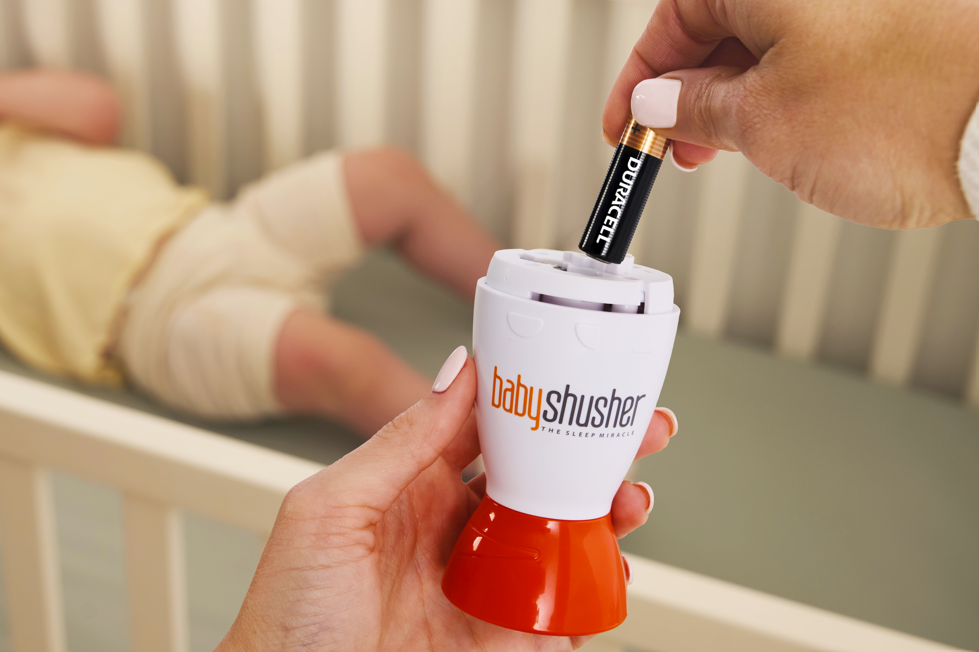
Have the “settle-my-brain” tool ready: Whether a sound machine, mom’s soft “shhh” voice, or a familiar night-light, having the tool that says “okay brain, we’re in settle-mode now” helps. This is where devices like Baby Shusher become practical.
-
Reset when needed: If baby fights more than a week or two, that’s a sign something changed (teething, schedule drift, illness). Parent-forums suggest going back to basics: review wake windows, return to earlier bedtime, simplify environment.
How to apply it — step-by-step tonight
-
Pick your cue: Decide on one constant calming cue (sound, light, or voice). For example, the rhythm of the “shhh…” and night light cue from Shusher Firefly.
-
Review timing: What time did baby wake today? What naps occurred? If bedtime seems late vs. wake window target, shift it earlier by 15-30 minutes.
-
Prep the room: Lights dim, minimal toys visible, sound turned on, temperature comfy (65-72°F).
-
Run your routine: Bath or change → quiet cuddle → cue (sound or “shhh”) → place baby down sleepy but awake.
-
Stay consistent for 5-7 nights: Sleep battles often improve when baby sees “this is our routine” repeatedly.
-
If the fight persists: Consider possible triggers (teething, growth spurt, illness) and adjust accordingly. If needed, consult a professional.
Frequently Asked Questions
Q: “How long will this sleep-fighting phase last?”
A: It depends. Some phases (e.g., around 8-10 months or during a nap transition) last 1–3 weeks. If fundamentals (routine, timing, environment) are solid, many parents see significant improvement in 5–10 nights.
Q: “Is my baby just being stubborn?”
A: Not really. Often what looks like stubbornness is a mismatch in biology + schedule + environment. When babies don’t have the right conditions, they resist.
Q: “Do I need to wake up earlier or put baby to bed later?”
A: You might need to adjust the wake window. If baby is acting wired (too much awake time) or under-tired (not enough awake time) you may need to shift bedtime earlier or later accordingly. The key is age-appropriate awake times.
Q: “Will sound machines help if baby fights sleep?”
A: Yes—they can improve the environment and add a consistent cue. But they’re only one part of the picture. A reliable sleep cue + consistent routine are more impactful. Check that sound machine is safe: moderate volume, correct placement.
Q: “When should I call a sleep consultant or pediatrician?”
A: If the sleep resistance continues for several weeks, there’s significant day-time sleep disruption, or you suspect a medical issue (e.g., reflux, hearing, developmental), then professional input is warranted.
Final Thoughts
When your baby fights sleep, it doesn’t mean you’re failing—it means your baby is telling you something: “I’m not ready for this cue yet,” or “Something in my system changed.” The best response isn’t to fight back—it’s to reset.
Tighten your routine, standardize your cue (hello “shhh…”), adjust your wake windows, and simplify your environment. With these aligned, the battle often shrinks and becomes a calm transition instead of a tug-of-war.
Your next step? Tonight, pick your consistent cue, make one timing tweak, and lean into the pattern. Because you deserve fewer fights and more rest—both for you and your little one.