The Bedtime Olympics
It’s 8:15 p.m. You’ve survived dinner, bath time, and at least three spontaneous dance parties. You dim the lights, whisper “time for bed,” and suddenly your toddler has urgent business:
-
A snack emergency 🍎
-
Existential questions (“Why is the moon round?”) 🌕
-
The sudden need to pee—again. 🚽
Sound familiar? You’re not alone. Toddlers have a sixth sense for bedtime avoidance. But there’s good news: a predictable bedtime routine can turn chaos into calm—and even make your little one look forward to bedtime (yes, really).
Why Toddlers Resist Bedtime
Bedtime battles usually come down to three things:
-
Control: Toddlers are learning independence, and bedtime feels like surrender.
-
Overstimulation: Screens, bright lights, and late-evening play can keep their brains in “party mode.”
-
Inconsistency: If bedtime changes nightly, toddlers test the limits.
The fix isn’t a power struggle—it’s creating cues that gently tell your toddler’s body, “It’s time to rest.”
Keep the Routine Simple (and Repeat It Like a Script)
Your routine doesn’t need to rival a Broadway production. The key is consistency, not complexity.
Try this 20–30 minute wind-down flow:
-
Bath time → helps signal “transition.”
-
Pajamas → comfort + predictability.
-
Brush teeth → one last silly song.
-
Quiet play or story → connect before separation.
-
Lights dim + soothing sound → start the calm.
-
Goodnight phrase → same words every night (“Sleep tight, love you, shhh.”).
By repeating these same steps in the same order, you help your toddler’s brain associate the sequence with sleep.
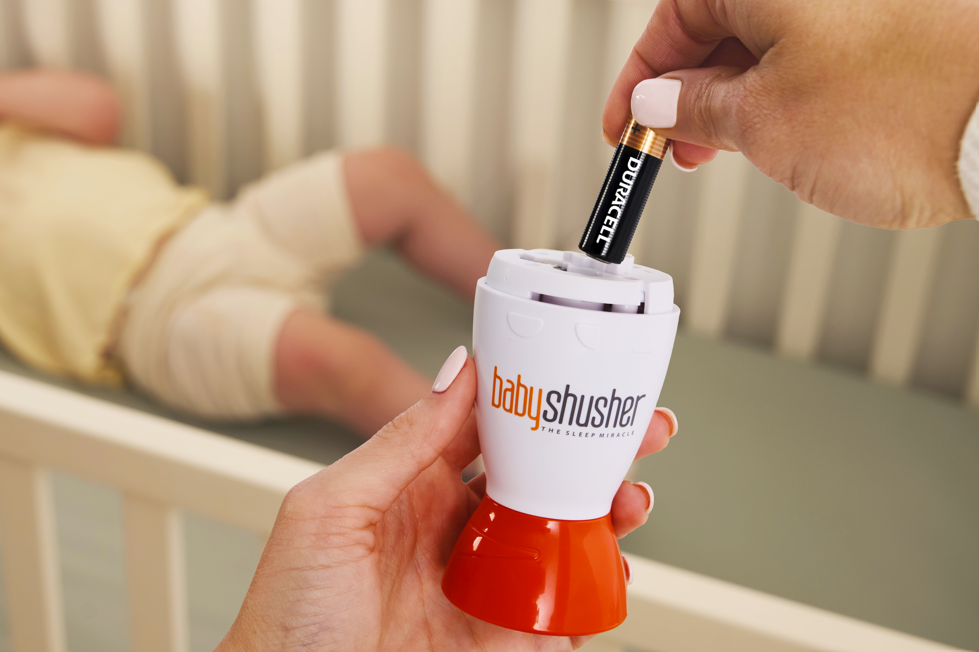
💤 Pro Tip: Turning on the Shusher Firefly during step five introduces a gentle “shhh” and amber night light—two cues that say, “Bedtime is happening.”
Make It Collaborative (Not Command-Driven)
Toddlers crave autonomy. Turn bedtime into a partnership, not a power struggle.
-
Let them choose between two pajamas or two books—controlled choices reduce standoffs.
-
Use a bedtime chart or sticker system so they can “check off” each step.
-
Invite them to “turn on the Shusher” or “close the curtains.”
These small decisions help toddlers feel proud instead of pressured.
Use Environmental Cues
Your toddler’s brain needs clear signals that it’s nighttime:
-
Sound: The rhythmic “shhh” from a sound machine mimics the womb’s comfort and drowns out household noise.
-
Light: Dim lights or use a warm amber nightlight (blue light tells the brain to stay awake).
-
Temperature: Keep the room around 68–72°F—cooler temps promote deeper sleep.
When light, sound, and environment work together, bedtime becomes predictable and peaceful.
Handle Pushback with Calm Consistency
Every parent knows the “one more story” routine. Here’s how to survive it without losing your mind:
-
Validate, then redirect: “I know you want another story. We’ll read it tomorrow. Now it’s time for sleep.”
-
Set limits early: “Two books, then lights out.”
-
Avoid negotiations: Toddlers are expert debaters—don’t engage in round 12 of “but why.”
-
Stay calm: If bedtime feels like a power struggle, they’ve already won the gold medal.
When to Adjust the Routine
Sometimes bedtime battles aren’t behavioral—they’re biological.
-
If your toddler takes over an hour to fall asleep, bedtime may be too early.
-
If they wake up before 6 a.m., bedtime may be too late.
-
Big life changes (new sibling, travel, daylight savings) can throw things off temporarily—just stick to the core routine, and normalcy returns faster.
Keep It Fun (Yes, Fun)
Bedtime can actually become something your toddler looks forward to.
-
Add a silly “goodnight” ritual (wave to the moon, high-five the Shusher).
-
Use calm “bedtime music” or white noise to help transition.
-
Celebrate success: “You followed every step tonight—way to go, sleepyhead!”
The goal is to create a ritual they recognize as safe, loving, and consistent—not something they need to resist.
The Long Game: Consistency Wins
Building a bedtime routine isn’t about perfection—it’s about predictability. Every repetition strengthens the connection between routine and rest.
And when your toddler finally snuggles in, eyes drooping as the “shhh” sound fills the room, you’ll realize: bedtime isn’t a battle anymore. It’s a rhythm—and you’re both finally in sync.
Frequently Asked Questions
Q: How long should a toddler bedtime routine be?
A: About 20–30 minutes. Enough time to wind down but not so long that they lose focus.
Q: What time should my toddler go to bed?
A: Most toddlers do best with a bedtime between 7–8 p.m., depending on naps and wake time.
Q: Should toddlers use a sound machine or nightlight?
A: Yes—consistent sound and gentle light cues can reduce resistance and help signal sleep time naturally.